
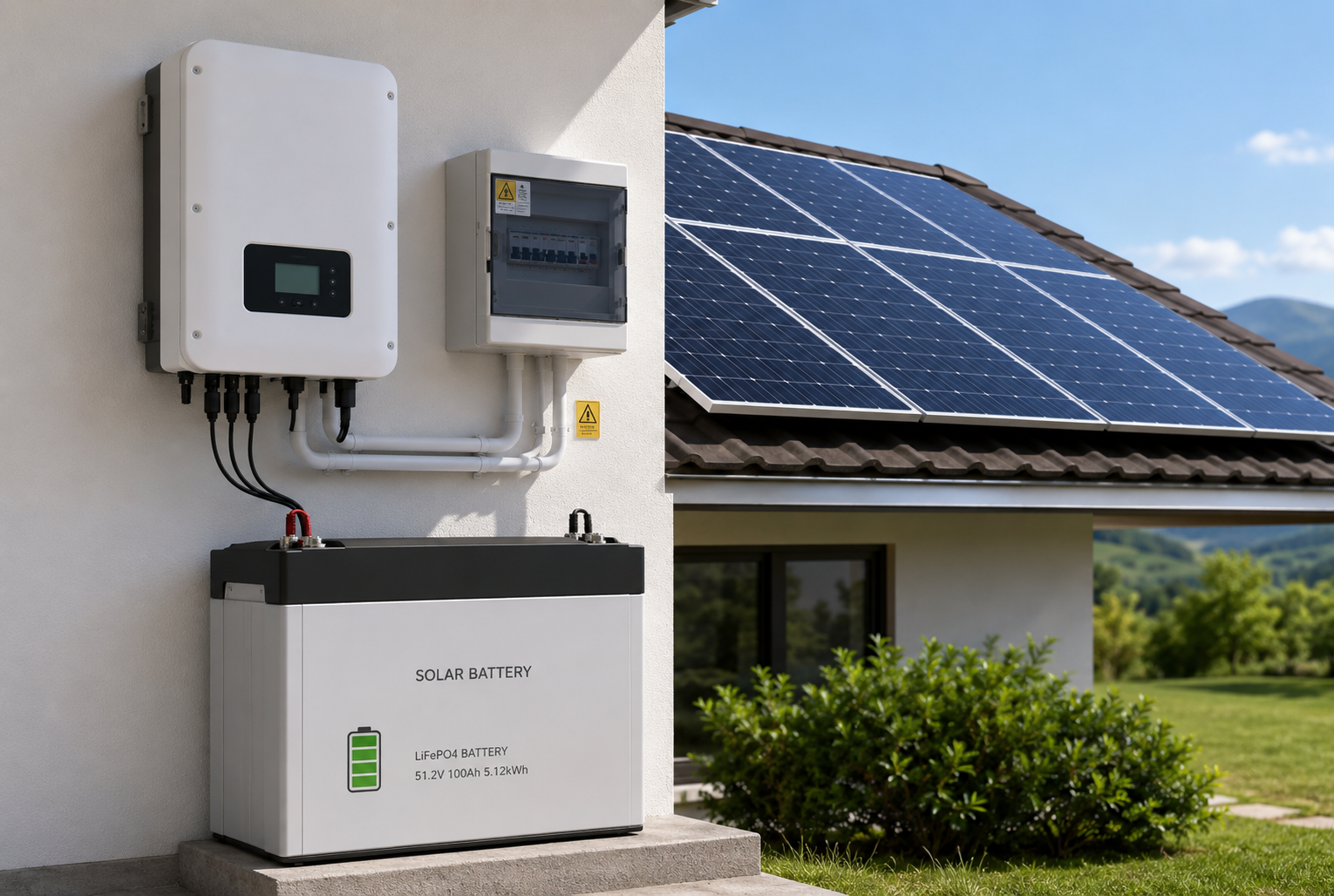
Choosing the right battery size is one of the most important decisions when adding energy storage to your home. A battery that is too small may not store enough of your excess solar power, while an unnecessarily large battery can increase your upfront investment without providing proportional benefits.
So, what size solar battery do you need for a Brisbane home? The answer depends on your electricity usage, existing solar system, evening energy consumption and what you want the battery to achieve.
How Is Solar Battery Size Measured?
Solar battery capacity is measured in kilowatt-hours (kWh). This tells you how much energy the battery can store.
Australian Government guidance states that household batteries commonly range from around 4 kWh to 14 kWh, although larger systems are available. The usable capacity can be slightly lower than the battery’s rated capacity because batteries are not normally discharged completely.
For example, a battery with a higher kWh capacity can generally store more excess solar energy for use later in the day or overnight.
How Much Electricity Does Your Brisbane Home Use?
Your household’s electricity consumption is one of the biggest factors when choosing battery capacity.
Start by checking your electricity bills for average daily usage. Smart-meter data can provide an even clearer picture because it shows how much electricity you use throughout the day.
A household that uses significant electricity in the evening may benefit from greater battery capacity than a home that consumes most of its electricity during daylight hours.
Your future energy needs should also be considered. Adding an electric vehicle, switching to electric appliances, installing a pool or increasing air-conditioning use can all change your electricity consumption over time.
Does Your Solar System Affect the Battery Size You Need?
Yes. Your battery should work effectively with the amount of solar energy your panels can generate.
If your solar system regularly produces more electricity than your household uses during the day, a battery can store some of that surplus for later use. However, a battery is only useful when there is enough excess energy available to charge it.
This means the right battery should be considered alongside your solar panel capacity rather than as a completely separate purchase.
Do You Want to Use the Battery Mainly at Night?
Your evening electricity usage can help determine how much storage you need.
If your solar panels generate electricity during the day but your household uses most of its energy after sunset, storing excess daytime solar can help shift that energy to the evening.
Think about appliances such as air conditioning, cooking equipment, televisions, lighting, refrigeration and hot water. Understanding when these loads operate can help an installer determine an appropriate battery configuration.
Do You Need Battery Backup During a Blackout?
If backup power is important, battery capacity is only one part of the decision.
Not every battery system automatically provides backup power during a grid outage. A system needs to be specifically configured for backup, and depending on the design, it may supply selected essential circuits or more of the property.
Tell your installer if keeping refrigeration, lighting, internet equipment or other essential appliances running during an outage is a priority.
Can You Add a Battery to an Existing Solar System?
In many cases, yes. The suitability of a retrofit depends on your existing panels, inverter, switchboard and electrical configuration.
Brisbane Solar Electrical states that its battery installations can be designed for existing solar systems, including single-phase and three-phase properties, with the current system assessed before recommending a battery solution.
For homeowners considering solar battery installation in Brisbane, a professional assessment can help match battery capacity with your home’s existing solar generation and electricity usage.
How Do You Choose the Right Battery Size?
Rather than choosing a battery based only on its advertised kWh capacity, consider:
- Your average daily electricity consumption
- How much electricity you use after sunset
- Your existing solar system size
- Available excess solar generation
- Whether you want blackout backup
- Your future electricity requirements
- Battery usable capacity and power output
- Your budget and available incentives
The Australian Government’s SunSPOT calculator can also provide an independent estimate based on factors including electricity use, roof area, climate and budget.
For a tailored assessment, Brisbane Solar Electrical can evaluate your current solar setup, electricity requirements and property before recommending a suitable battery solution.
The right battery is not necessarily the biggest one available. It is the system that can store a useful amount of your excess solar energy, meet your household’s usage patterns and support your future energy needs.